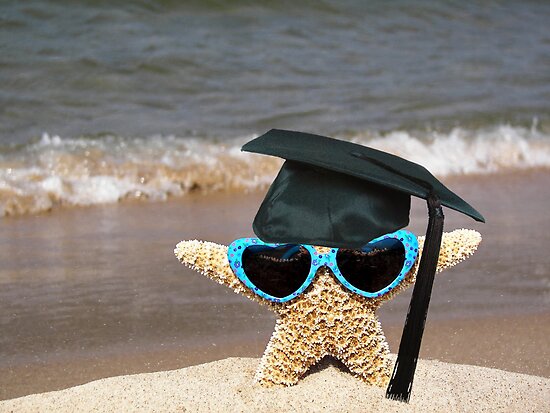
Yesterday was the last day of class. I am now, officially, a certified north pacific groundfish observer! Yay?
Yeah, kinda like this.
Out of a class of 24, miraculously we all passed every exam, physical skills, and fish identification assessments with a grade of 80% or better! Some of us even got 100% on our Fish ID test ... but I wont name names *cough cough* The last day was kinda fun, but at the same time, nerve wracking. It reminded me of high school graduation in some ways. We were all just finishing a pretty stressful course of study, and going off into a new opportunity where none of us know what to expect. Everyone was rightfully proud of themselves, but honestly a little nervous.
The newest North Pacific Groundfish Observers aka the 2014 Greenhorns! Congrats Everyone :)
As the last day of training came to an end, they generated our research cruise numbers, (kinda like an ID number that will tie all of our data to us within the NOAA file systems) and began calling us up one by one to receive our graduation certificate, vessel assignment. The pollock fishing season in the Bering Sea starts on the 20th, this monday. Needless to say, everyone is flying out ASAP! Our contractors want everyone up in AK ready for the season opening. There's only one small issue, Dutch Harbor is stuck in a blizzard with 20 ft seas. No planes are flying in or out, let alone boats leaving to go fishing! Regardless of real-world weather, logistics and plane jams, upon completion of our training, every classmate received their new assignment. It was like any other graduation, announcing the graduates' next school or job: "And after this accomplishment John is headed to Alaska on the Fish Stalker!" All of the instructors would take a moment to comment about each boat. How much they liked, or disliked it, what kinds of food they serve, if the observer has their own room etc. Some people looked stricken, wondering how the hell they got to this point, and what got into their heads to think this would be a good idea. Others were excited to get out, it was finally happening! And then it was my turn ...
"Next up, Ali Carter! ... Who does not have a boat yet, and will be staying in Seattle!" ... I'm the only one in the class with no assignment. My mom was stoked, "Oh good, maybe you'll just stay in Seattle!" No, this is what I've been training for, and now I want to go! But as fate has it, I will be spending the foreseeable future in fishery purgatory. Its neither bad nor good. On one hand I want to go to Alaska, start my job and my next step of this adventure. Yet, a small part of me is content to stay here, ride my bike and continue exploring Seattle. Either way, I have no choice, I'm stuck here in this holding pattern until further notice. Maybe once the blizzard raging in Dutch Harbor subsides, planes start moving, and boats start fishing I will get my call ... One Day! Until then I'll be chillin' in Seattle with my bike. Go Hawks?
Disclaimer: More and better photos to accompany this post are on their way- but I didn't want to wait to post it any longer. So, without further adieu, I give you (drumroll please) SAFETY DAY!
Location: Seattle, WA
Temp: 42 F
When I was 11 years old my family moved from the Inland Empire to Huntington Beach, California. Now that we lived so close to the beach, my siblings and I became obsessed with the ocean. Everyday we begged to go to the beach. The very next summer, my mother, who was a little uneasy about all of her babies being "swept into the sea", made us a deal: If you want to surf, you all have to do at least one summer of Jr. Lifeguards.
Shan, Greg and I, the first year all three of us could do Jr. Guards together!
I'm not sure wether this was initially a plan to scare the ocean out of us or if she just thought we'd get tired of the enormous physical strain included in the jr. lifeguard program; either way you look at it, the plan to keep us out of the water clearly failed. My brother is currently an open water lifeguard, my sister loves to sail, and I am going to work on the Bering Sea, voluntarily. One thing she did accomplish with the jr. guard mandate was a solid foundation in marine safety, emergency preparedness, and situational awareness.
There was a time on boats that it was considered bad luck to discuss safety drills and emergency preparedness, fortunately times have certainly changed. Just as its unheard of for the public to go without a seatbelt, or eat raw eggs, the fishing industry has changed to make its everyday actions safer as well. And believe me, they've made some really amazing developments. GPS and satellite locating systems automatically deploy for the boat as soon as they drop underwater. Making distress signals to rescue crews possible, even if no one on the boat has time to make a single mayday call. All items are designed for optimal use at sea. Life boats include freshwater collectors on the canopies, automatic strobe lights and handheld flares that can go a thousand feet into the air, in the rain. Even the life rafts automatically deploy if the crew doesn't have time to do so, and they have 100% deployment rate in the instance of sinking vessels.
Yesterday was safety day at NOAA Observer Training, and they take no shortcuts during this section of the class. We have access to the best trainers, first hand accounts, and newest technology available. We started out hopping into our immersion suits, which to the unaccustomed eye, look like giant lobster costumes. They are actually specially designed neoprene drysuits designed to keep you afloat, warm, dry and visible while cast adrift at sea (they even have inflatable pillows, reflector strips and their own strobe lights. Survival of an abandon ship event is 7 times more likely if wearing an immersion suit. So we practiced putting them on, a lot, and then we practiced while being timed, and then we practiced at random intervals, some even in complete darkness. It got to the point that our instructor would twitch and we'd jump out of seats ready to abandon ship at the drop of a hat.
I'm the lobster on the left.
After we had mastered our lobster suits the class took a short field trip out to the lake. There we did our in-water exercises. Getting into the water in an immersion suit was pretty trippy. The suit was in-fact dry, but the pressure of the water squeezes all the air out of the suit. It leaves you feeling like you're stuck in vacuum-sealed, insulated bag. The water was in the mid forties but I wasn't even cold! Its much more comfortable than entering the water in a traditional wetsuit, but also less movable. You are not able to swim in an immersion suit, they are designed for you to float in them. Jumping off the high dock, (approx. 7ft haha) we had to take special precautions when jumping to allow for the air to exit the suit while keeping all of the watertight seals intact.
There's a team of us getting into the water, practicing formations, and squeezing into our life raft
We then had to practice a few water formations. Picture a bunch of lobster-suits floundering around in the water trying to do impromptu synchronized swimming, except communication is greatly inhibited by the watertight neoprene covering our mouths and ears. We did a team-swim, where everyone makes a horizontal line, linking arms to the next persons legs to make one long backstroking creature. After the team swim we got into the starburst formation, everyone links arms in a circle laying on the surface leaving their feet free to kick up water, in hopes of attracting the eyes of the rescue helicopter. Lastly we laid cris-crossed in a line, like sardines in a can, creating a human raft for an "injured" teammate to climb on top out of the water. We even practiced man overboard drills. Turns out if you fall overboard and I'm the only one to throw the life buoy, you're probably better off trying to swim back to the boat. I couldn't get it anywhere close to our "man overboard" smiley buoy. Aside from my apparent failure of upper-body strength and aim, the rest of the in-water tests went pretty well.
The Anchorage Alaska coast guard division has a saying, "Luck favors the prepared." I learned from a young age to train for emergency situations, ask safety questions, and make sure of my own situation before ever leaving the shore; the ocean is not a joke. The observer program consistently produces professional scientists, who are as well prepared for any safety situation as the captain and officers of the boats we sample on. Going to the Bering Sea may have it's risks, but that is exactly why these trainings, technologies, and efforts exist. They work, make a difference, and save lives.
Playing around in a 10 man life raft!
Here's some more Immersion Suit Fun that a friend of mine shared with me upon reading my post. No I'm not in this video, but I'm totally going to try to get my boat to do this after one of our safety drills!!
Commercial fishery observers can be out at sea for a maximum of 90 days, it's in our contract. What they don't tell you is that 90 days of isolation is the point at which all previous studies pretty much agree that you will go crazy; really, actually, clinically insane. So naturally they structure the training course to simulate that. It must be working too, for the past few days I have had some over the top bat-crap-crazy dreams. Compounded by the fact that I hardly ever dream at all, I have been thinking twice about what I eat or read before going to bed.
The first few dreams were your average-grade odd-balls, like talking to fish, wandering on the beach with nowhere to go, or ending up in the "I'm on a boat" SNL music video. But last night's dream takes the crazy-cake. It started off in Long Beach Harbor with my day camp, (fun fact: I used to direct a day camp!) on the harbor cruise tour boat. It was an enjoyable field trip, until I spotted a very large orca (killer whale) charging right at us. The whale was pissed and coming for us. Obviously everyone looks at me, the marine biologist, to do something ... so I do the first thing that comes to mind, I jump in the water. Oh yeah, my subconscious is a bad-ass apparently. I swim towards the shore to distract the whale, while hopefully getting help, because dreams contain no logic and no cell phones. I looked back and all the sudden the tour boat is now a sinking school bus! So I sprint back to them. (I wish I could swim in real-life like I swam last night.) I dove down to save the kids from the sinking bus, in the middle of the harbor. The orca, obsessed with the bus, dove down to spoon with it as it sank to the bottom of the harbor, which apparently was several fathoms deep (60-70ft). When I arrived on shore all the kids broke out their lunch pales for snack time. Problem solved. No biggie. And the best part was that I didn't really see anything out of the ordinary until I woke up thinking "Why was there an orca in Long Beach Harbor?"
When my alarm went off this morning, I leaned over the mattress to turn it off and found my marine mammal interaction reports laying on the floor. I had fallen asleep right after finishing them. I figure at least I'm sleeping well enough to dream, and getting in some good marine mammal identification practice. It's official, I now eat, sleep, and dream fisheries management.